JRC at the 9th International VPH Conference
The European Commission’s Joint Research Centre (JRC) played an active role in the VPH2026 Conference, held in Milan, bringing its expertise in computational modelling and in silico medicine to discussions on the future of healthcare.
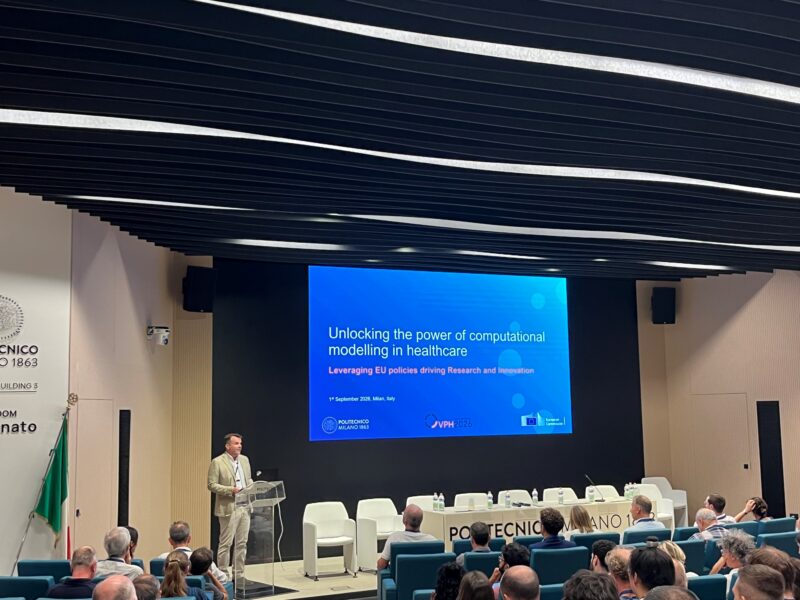
Sara Bridio, project officer at the JRC, served on the conference organising committee ,while Maurice Whelan, Deputy Director of the JRC’s Directorate for Health and Food, delivered the opening plenary lecture, “Getting more out of computational modelling to benefit health and society in the EU”. His presentation highlighted relevant European policies and opportunities to strengthen the uptake of in silico modelling across research, industry and commercial applications, underlining the growing role of computational approaches in addressing health challenges.
Connecting science, policy and practice
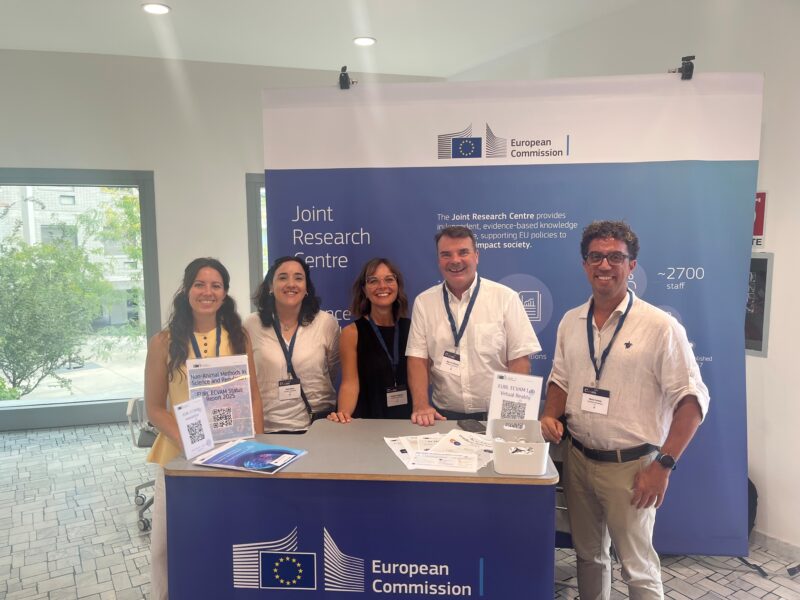
Throughout the conference the JRC exhibitor stand served as a hub for networking. Visitors learned about the JRC’s activities in the field of in silico medicine, experienced the virtual‑reality tools and discussed other initiatives relevant to the VPH community.
JRC scientists were also involved in different activities during the conference, such as meeting early career researchers during the “Meet the Mentor” event. Sara Bridio presented a study for investigating the translation gap to unlock the potential of Digital Twins in healthcare and joined the plenary panel “From Credibility to Trust”, discussing how to move beyond technical validation toward clinician, patient and regulator confidence in in silico models.
Two workshops on the future of computational modelling
In collaboration with Politecnico di Milano, the JRC also co-organised two pre-conference workshops, addressing both the policy landscape for computational modelling and the role of new approaches in reducing reliance on animal testing.
- Unlocking the Power of Computational Modelling in Healthcare – Leveraging EU policies driving Research and Innovation
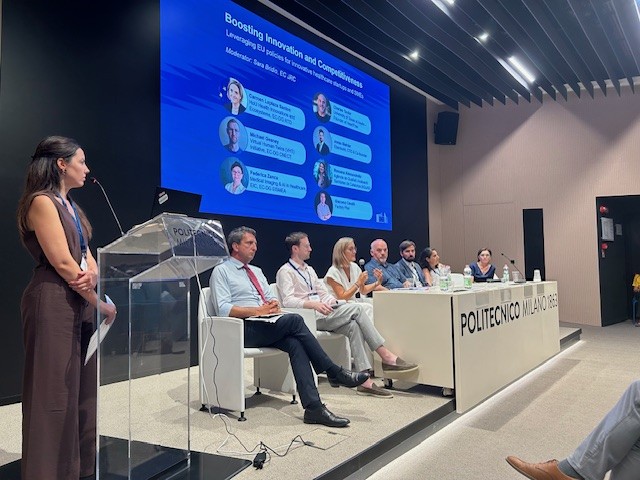
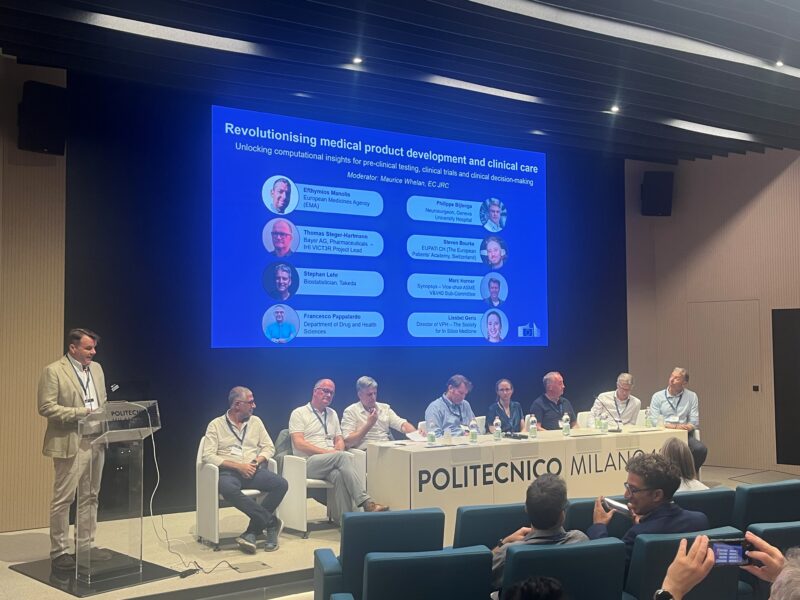
Chaired by Maurice Whelan and Sara Bridio, the workshop opened with an overview of EU policies and regulations governing in silico medicine, featuring speakers from different Directorate-Generals (DGs) of the European Commission: Carmen Laplaza Santos, DG for Research and Innovation, DG RTD; Michael Geaney, DG for Communications Networks, Content and Technology, DG CNECT; Federica Zanca, European Innovation Council and SMEs Executive Agency, DG EISMEA, and the European Medicines Agency (Efthymios Manolis).
Two panel sessions then brought together researchers, policymakers, industry representatives, clinicians, patient advocates and other stakeholders to discuss how computational modelling can shape the future of healthcare and how the EU policy framework can accelerate this transition. Full details on workshop agenda and speakers can be found here.
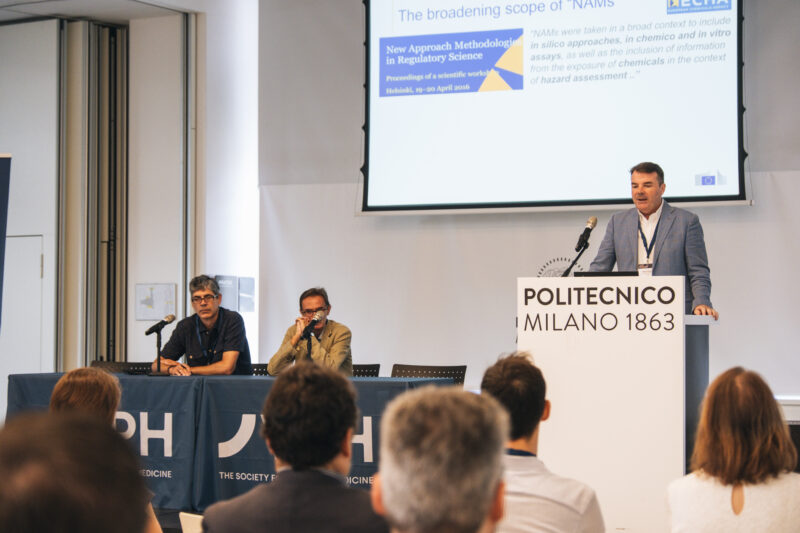
- Transforming Science – Implementing the 3Rs principle and unlocking human-centred research with In Silico Modelling and other New Approach Methodologies (NAMs)
Aimed at PhD students and early‑career researchers, this workshop introduced NAMs and illustrated their role in applying the 3Rs principle (Replace, Reduce, Refine animal models) within biomedical research and regulatory contexts, with a particular focus on replacement. The session was led by JRC’s Elisabet Berggren, Milena Mennecozzi and Eleni Petra, supported by Matteo Costi of Politecnico di Milano. Through a combination of lectures and interactive sessions, the workshop aimed at discussing how in silico and in vitro NAMs can be used to replace animal testing and provide improved biological knowledge relevant to the human health.
Building a stronger European in silico ecosystem
The JRC’s participation in the conference, together with the involvement of other European Commission Directorates-General, reflected the Commission’s commitment to fostering a robust European ecosystem for in silico medicine, supporting the 3Rs, and promoting trustworthy in silico medicine solutions across the EU. By co‑organising workshops, delivering plenary talks and engaging directly with researchers and industry, the JRC aimed at helping bridge policy, science and practice, contributing to paving the way for more rapid adoption of computational modelling in European healthcare.