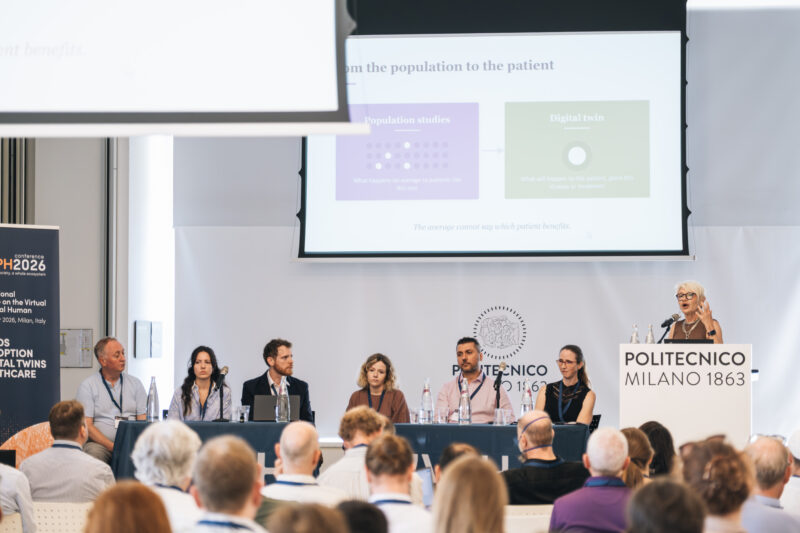
From Credibility to Trust
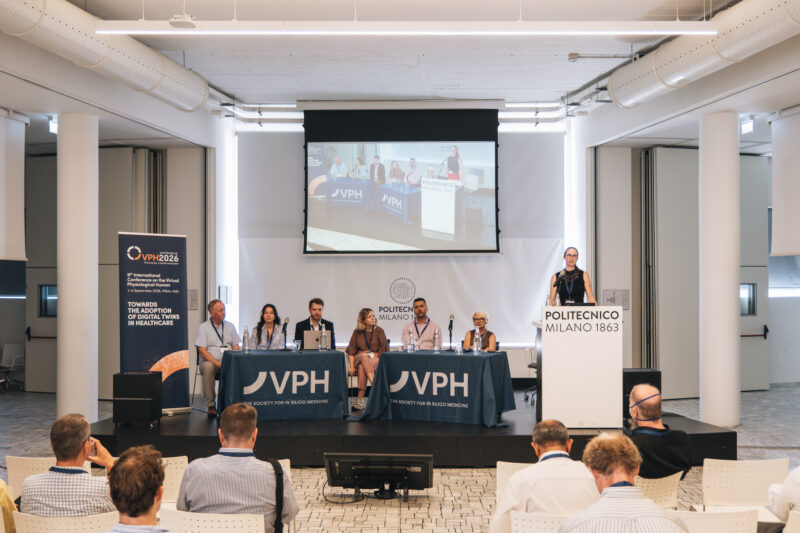
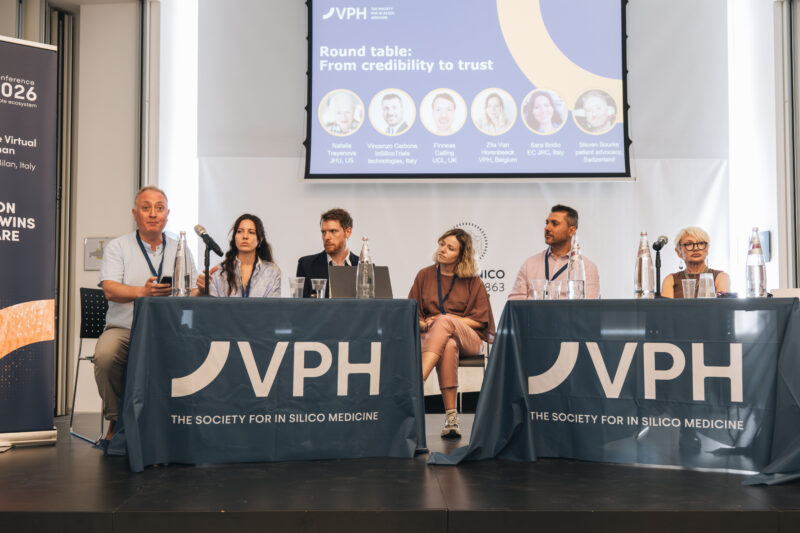
On 3 September 2026, during the VPH Conference in Milan, VPH hosted a plenary roundtable "From Credibility to Trust".
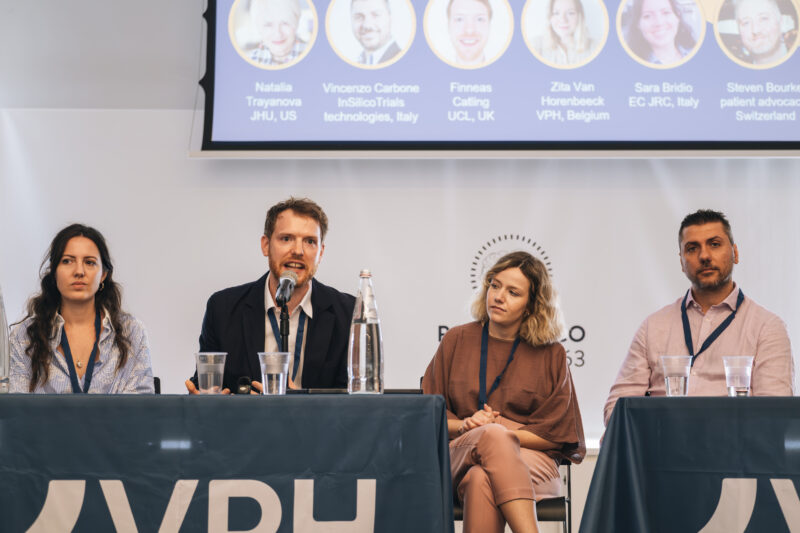
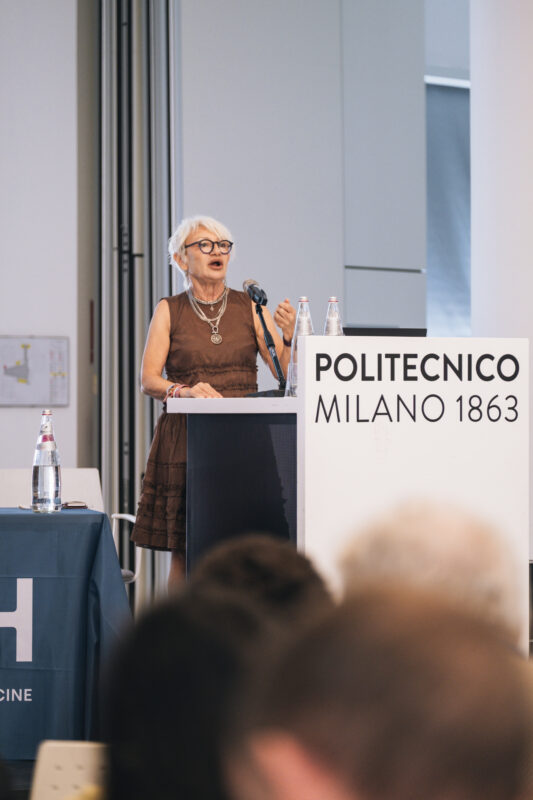
Moderated by Prof. Liesbet Geris, Executive Director of the VPH Society, the panel brought together differing perspectives from academia, industry, clinical practice, regulatory science, social science and patient advocacy:
- Natalia Trayanova (Johns Hopkins University, US),
- Vincenzo Carbone (In Silico Trials Technologies, Italy),
- Finn Catling (University College London, UK),
- Zita Van Horenbeeck (VPH, Belgium),
- Sara Bridio (European Commission, Joint Research Centre, Italy)
- Steven Bourke (patient advocate, Switzerland)
Natalia Trayanova opened the session with updates from clinical trials, which sit right at the intersection of technical credibility and the trust of clinicians and patients. Presentations by the panelists followed and sparked the discussion.
Beyond validation: same model, different questions
In the in silico community, credibility is usually framed in technical terms, through validation, uncertainty quantification, and evidence of predictive accuracy. While those aspects are of great importance, credibility as a concept extends beyond that. Accordingly, the roundtable addressed a slightly different question: what do trust and credibility actually mean to different profiles in the field? A model can be technically credible, well-validated, accurate, and robust, and still fail to be trusted by the people it is meant to serve if it was never built with their expertise, concerns, or lived experience in view. Trust, the panellists argued, does not follow automatically from technical credibility. It is contextual and interpersonal, and it is negotiated separately between modellers, clinicians, patients and different publics, each of whom may be asking different questions of the same model.
Moving from tick-box to meaningful involvement
From there, the discussion turned to how the community can move towards meaningful, rather than tokenistic, patient and public involvement and co-design, and what roles patient experts, advocates, social scientists and hybrid profiles can play in this. Questions raised included: How should young scientists and entrepreneurs take the many actors and aspects of the credibility–trust axis into account? How can trust-building and co-creation avoid becoming a tick-box exercise, and how do we properly involve patients? And do we need to train new profiles that bridge these worlds, such as patient advocates and science communicators, and how can we make that sustainable? Participants highlighted the importance of building reflexivity into the training of young scientists. They also called for rethinking broader structural incentives, including how funding structures value involvement and how patients are compensated for their contributions.
The roundtable showed that as the field matures, the question is no longer only whether our models work, but also whether the people they are meant to serve can trust them, and whether their voices are heard in how those models are built.