From algorithms to headlines: Media coverage of in silico medicine over the past 10 years
How has the media portrayed in silico medicine over the past decade? A new VPH study analyses 10 years of coverage across six countries, revealing a growing focus on AI and significant differences in how newspapers balance technological promises with risks and implications.
As in silico medicine moves from research laboratories towards real-world applications, how is the media telling its story?
In silico medicine is rapidly evolving, with computer modelling, simulation and AI increasingly moving towards operational applications around the world. Yet these technologies are still far from being part of everyday healthcare. As the field makes the transition from the lab to the hospital, the media plays an important role in shaping how these developments are understood by the public, policymakers and other stakeholders.
So, how much attention has in silico medicine received in the media—and how has the way it is portrayed changed over time?
Over the past year, VPH science communicator Davide Montesarchio and social scientist Zita Van Horenbeeck, with the support of KU Leuven Master’s student Mona Del Piero, investigated media coverage of in silico medicine across six countries (USA, UK, Italy, France, Belgium, Australia) between 2015 and 2025, combining quantitative and qualitative methods.
The research was presented by Davide Montesarchio at the VPH 2026 Conference in Milan, revealing several interesting trends.
From in silico medicine to AI
The overall volume of coverage increased steadily over the decade, as expected for a rapidly developing field. But the study also identified an important shift in what the media talks about when it talks about in silico medicine.
AI-related terminology became increasingly prominent over time, with a particularly marked increase in both the total number of articles and the use of AI-related keywords from 2023 onwards. This trend coincides with the broader surge in public and media attention surrounding generative AI following the release of ChatGPT and subsequent developments.
This growing association with AI creates both opportunities and challenges for in silico medicine: increased visibility can bring greater public attention to the field, but it may oversimplify the narrative, or overshadow other fundamental components of in silico medicine, including mechanistic modelling, simulation and Virtual Human Twins.
What does the media promise…and what does it question?
The qualitative analysis looked in depth at 20 articles from each of the 12 newspapers. One of the most common narratives presented AI and in silico technologies as enabling clinicians to do things that were previously impossible. At the same time, doctors were generally portrayed as retaining the final say in clinical practice, positioning AI as an enabler rather than a replacement for clinical expertise.
The greatest differences between newspapers emerged in how they addressed the implications of these technologies.
French newspaper Libération stood out as an outlier, adopting a more critical approach than the other newspapers analysed. US newspapers tended to take a more balanced position, discussing with competence both the promises and implications of in silico technologies within the same articles.
By contrast, British and Italian newspapers more often treated implications as a separate or secondary dimension. These issues were either confined to a few sentences towards the end of otherwise positive articles, or explored in less frequent articles specifically focused on implications and risks.
Why does this matter?
Media coverage does more than simply reflect public understanding of emerging technologies. The media, policymakers, researchers and the public are part of a continuous dialogue in which each influences the others. Media narratives can therefore shape public expectations, policy priorities and, ultimately, the environment in which new technologies are developed and funded.
Understanding these narratives can help researchers and organisations in in silico medicine communicate more effectively, choosing, case by case, whether to surf the current media wave or broaden the conversation beyond the topics currently attracting the most attention.
The findings will now be developed into a scientific article for submission to a journal specialising in science communication.
Related news
VPH Leadership continues into 2027
We are pleased to present the 2027 Board of Directors of the VPH Society, appointed during the recent GA in Milan to guide the Society’s strategic priorities and initiatives in the year ahead.
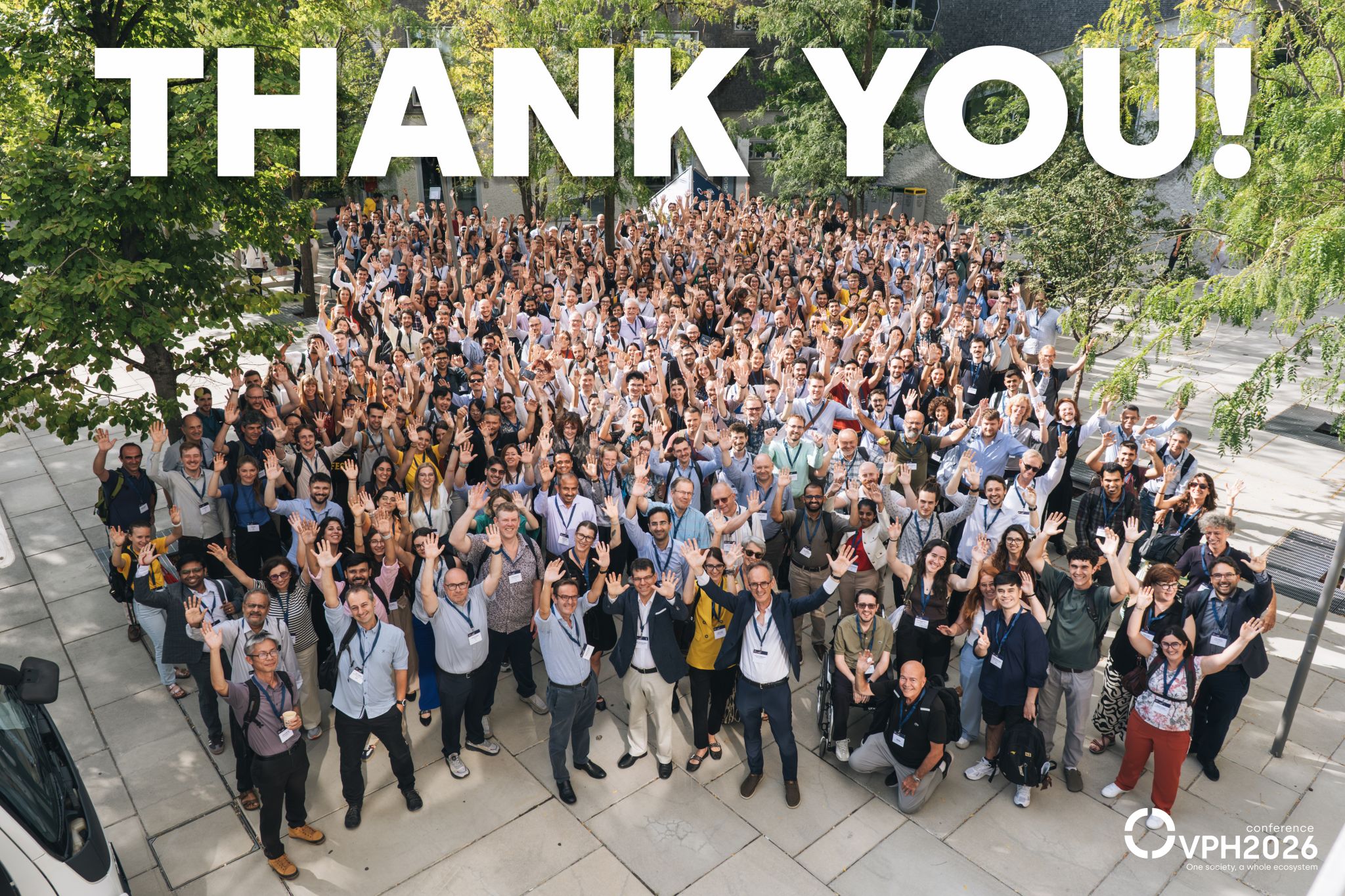
VPH2026 brings together 650 experts in Milan to advance in silico medicine
A record 650 participants gathered in Milan to exchange knowledge, foster collaboration and explore the future of in silico medicine.
Meet the new Young Scientists Committee (2027-2028)
During the closing ceremony of its 2026 Conference, VPH announced its largest-ever Young Scientists Committee, which will begin its two-year mandate in January 2027, strengthening opportunities for engagement, support, and representation of early-career researchers.