Advanced VHT Platform Annual Event 2026
Bringing the European Virtual Human Twin community together in Brussels to share progress, strengthen collaboration and shape the next steps towards the Advanced VHT Platform.
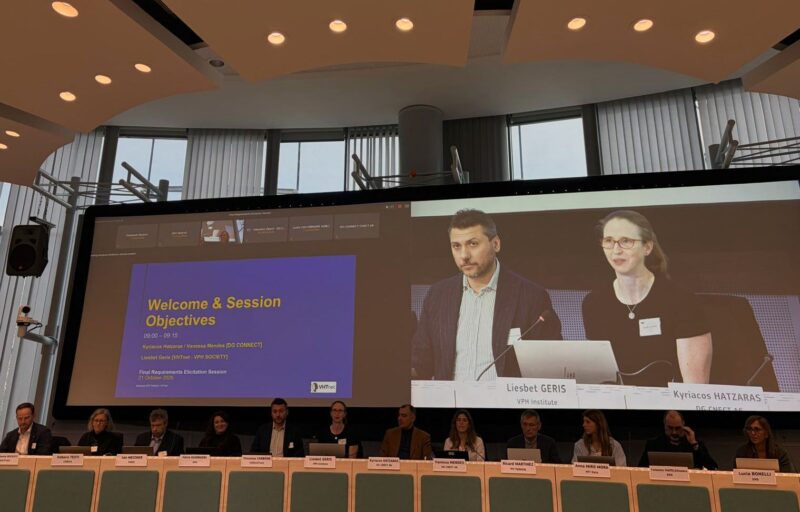
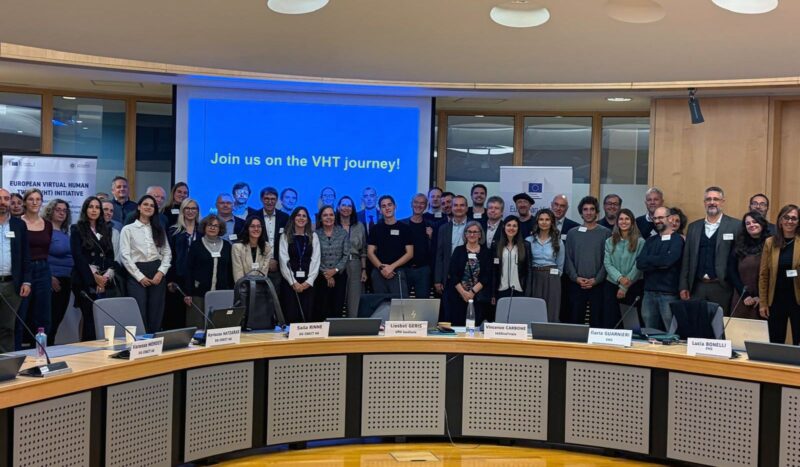
On 20- 21 October 2026 researchers, clinicians, technology providers and policymakers gathered in Brussels for Annual VHT Day 2026 to discuss progress towards a shared European infrastructure for biomedical research and healthcare innovation.
The event highlighted the importance of collaboration across disciplines, institutions and countries in advancing Virtual Human Twins (VHTs) and translating computational models into practical healthcare applications. Discussions also explored how the initiative contributes to Europe’s broader AI Continent Action Plan and the European Health Data Space (EHDS).
Building a trusted and interoperable European platform
Saila Rinne (DG CONNECT) highlighted the transformative potential of the Advanced VHT Platform for biomedical research and healthcare. She emphasised the importance of establishing a scientifically sound, interoperable foundation that connects expertise and capabilities across institutional and national boundaries.
Kyriacos Hatzaras (DG CONNECT/ EU AI Office) further underlined the platform’s role as a cornerstone of the European VHT initiative. More than a technical infrastructure, the platform represents an evolving, collaborative process designed to connect fragmented modelling approaches and support the development of trustworthy, evidence-based solutions for clinicians and patients.
The Advanced VHT Platform is being developed as an open-source, federated and privacy-preserving infrastructure for health data, computational models and computing resources. Its architecture is designed to support secure collaboration while enabling institutions to retain control over their assets. The approach also emphasises cybersecurity and compliance with relevant legal, ethical and regulatory requirements.
The platform brings together six core components:
- VHT Framework
- Federated Repository
- Access Federator
- Orchestrator
- Computing, Storage and Network Services (CNS)
- Intellectual Property Rights Management (IPRM) Policy
Together, these components are intended to support the integration, governance and execution of computational models within a federated European ecosystem.
Co-creating the platform with its users
A central message of the event was that the Virtual Human Twin ecosystem must be built collaboratively. Our executive director, Prof Liesbet Geris (VHTnet Senior Community Manager), presented the initiative’s guiding principle: “Built not just for you, but with you.”
This approach places community participation at the heart of platform development, ensuring that its requirements reflect the needs of the people and organisations who will use it. The initiative aims to bring together clinicians, researchers, asset owners, technology providers, patients and citizens, recognising their different perspectives and contributions.
The VHT User Group now brings together more than 200 experts from 21 countries. Through five real-world application scenarios, its members are helping shape platform requirements and guide its development towards practical use cases.
The discussions in Brussels also demonstrated a strong interest in continued engagement as the platform takes shape, including opportunities to test early prototypes, develop complementary computational models and align related initiatives with the VHT infrastructure.
Looking ahead: key platform milestones
Two major milestones lie ahead:
- September 2027: planned release of the Minimum Viable Product (MVP).
- September 2028: planned release of the full platform.
In the lead-up to these milestones, continued collaboration with the user community will be essential to refine requirements, test emerging capabilities and strengthen interoperability across the European VHT ecosystem.
By combining technical development with community-driven governance, the initiative aims to establish a trusted foundation for advancing in silico health tools and supporting their translation from computational research into healthcare practice — from byte to bedside.
Join the Virtual Human Twin community
The development of the European VHT ecosystem depends on active participation from organisations and individuals across research, healthcare, technology and policy.
There are two main ways to get involved:
- Sign the VHT Manifesto. Join more than 150 European organisations expressing their commitment to advancing in silico health tools from byte to bedside.
- Join the VHT User Group. Contribute to platform requirements, participate in real-world application scenarios and help shape the future implementation of the Advanced VHT Platform.
By working together, the community can help ensure that the platform develops in response to real-world needs and supports a more connected, collaborative and innovative European healthcare ecosystem.