Building the Advanced Virtual Human Twins platform with the user community
The European Commission has officially initiated the procurement of a state-of-the-art platform for advanced Virtual Human Twins.
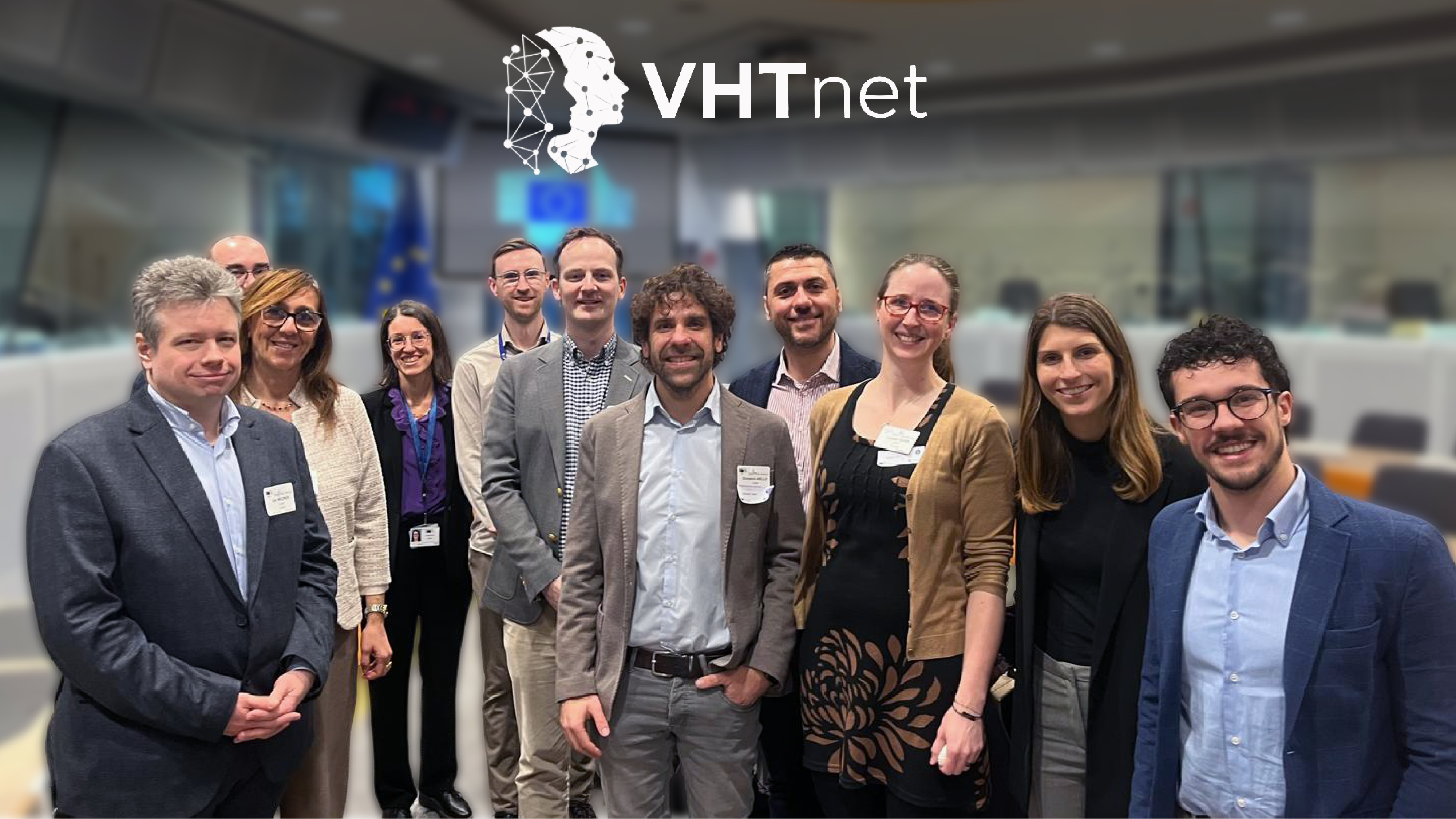
This landmark infrastructure, situated within the European Virtual Human Initiative and funded under the Digital Europe Work Programme, officially commenced in January 2026, with the kick-off of the first specific contract (SC1) for Software product development and related services.
The SC1 contract (Framework Contract EC-CNECT/LUX/2024/OP/0014) was awarded to the VHTnet consortium, a powerful alliance of industrial and scientific leaders:
- Lead Partner Engineering International Belgium – VHT Architecture, is supported by NTT Data – IPR management, In Silico Trials Technologies – VHT framework, CINECA & Sano – HPC and cloud infrastructure.
- VHTnet includes specialist scientific sub-contractors in University of Bologna (Technical), University of Valencia (IPR), and the VPH (Community & User group).
Engaging the User Community
To ensure the platform is fit for purpose, the European Commission gathered expressions of interest from over 200 multi-disciplinary experts—spanning modelling, clinical, infrastructure, data, patient advocacy, ELSI (Ethical, Legal, and Social Implications), and Intellectual Property (IP) – to create a VHT User Group. The experts are set to regularly meet and work towards elucidating user requirements, as well as later support testing and evaluating the platforms and service.
To kick-off the interaction with the VHT user group, the European Commission and the VHTnet consortium hosted the hybrid inaugural Introductory Requirement Elicitation Session on February 24th, 2026, in Brussels. The session was chaired by Margherita Fanos and Kyriacos Hatzaras from DG CNECT.A6 – Artificial Intelligence in Health and Life Sciences. In collaboration with the VHTnet Consortium, led by Giovanni Aiello of Engineering, the user group was presented with the overview of the VHT policy initiative alongside the consortium’s workplan.
In the second part of user group session, the VHTnet Senior Community Manager, Liesbet Geris (VPH), and Elicitation Process Task Lead Vincenzo Carbone (In Silico Trials Technologies), along with VHTnet’s subject-matter experts facilitated interactive session on following thematic requirement streams for SC1:
- User Workflows & Personas
- Interoperability & VHT Framework
- Users’ Computational Services Needs Analysis
- Intellectual Property Rights & Management
Through live interactions and online questionnaires, the VHTnet consortium partners and user group members exchanged key perspectives and outlined their envisioned requirements for “SOFTWARE PRODUCT DEVELOPMENT & SERVICES (SC1)”. As the contracting authority of the VHT platform, the European Commission representatives facilitated the dialogue, providing essential clarifications and supported the interactions between the platform developers and the user group.
Outcomes and Next Steps
The session, attended by over 150 participants (online/on-site), fostered lively discussions and a critical exchange of expectations and baseline data. Attendees commended the EC for this strategic initiative as well as for the unique opportunity of the user group to shape the platform’s development, testing, and deployment.
The success of this inaugural meeting sets the stage for a series of bi-weekly, topic-specific Requirement Elicitation Sessions running from March to September 2026. The EC, the VHTnet consortium, and the user group concluded the event with a shared enthusiasm to foster a collaborative environment where the engaged ecosystem comes together to accelerate the development and uptake of digital twins in healthcare, generating a tangible impact on the health and care of patients in the EU.
————————–
The Advanced VHT Platform is designed to provide seamless access to data, models, and scientific computing resources. Its primary mission is to empower researchers, innovators, and clinicians while advancing European science and technology. Built in full compliance with EU values and regulations, the platform enables users to model human anatomy across various scales within a distributed, pre-competitive space—delivering tangible benefits to citizens and patients alike.
Further information can be found here:
Platform for Advanced Virtual Human Twin (VHT) Models | Shaping Europe’s digital future